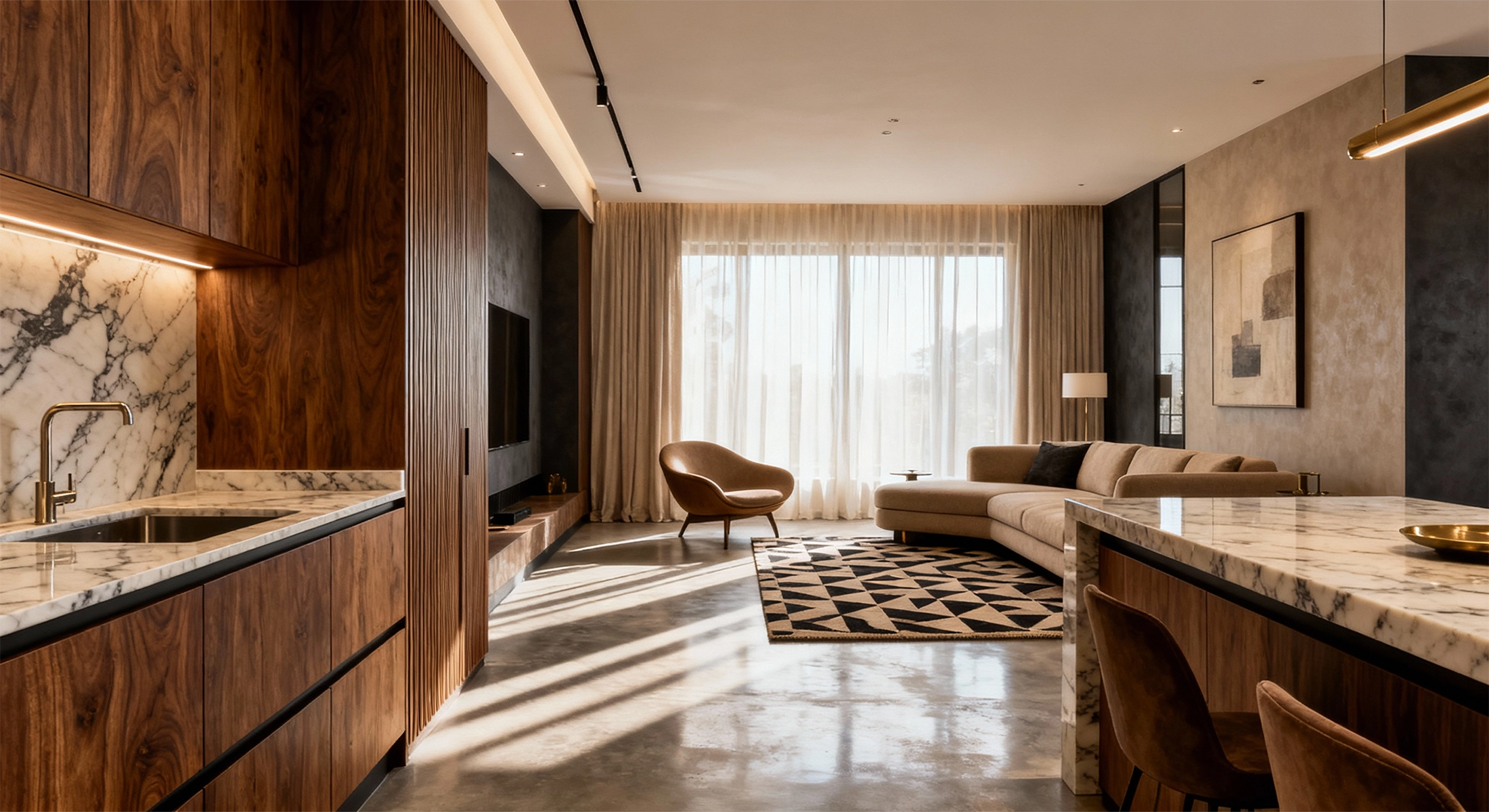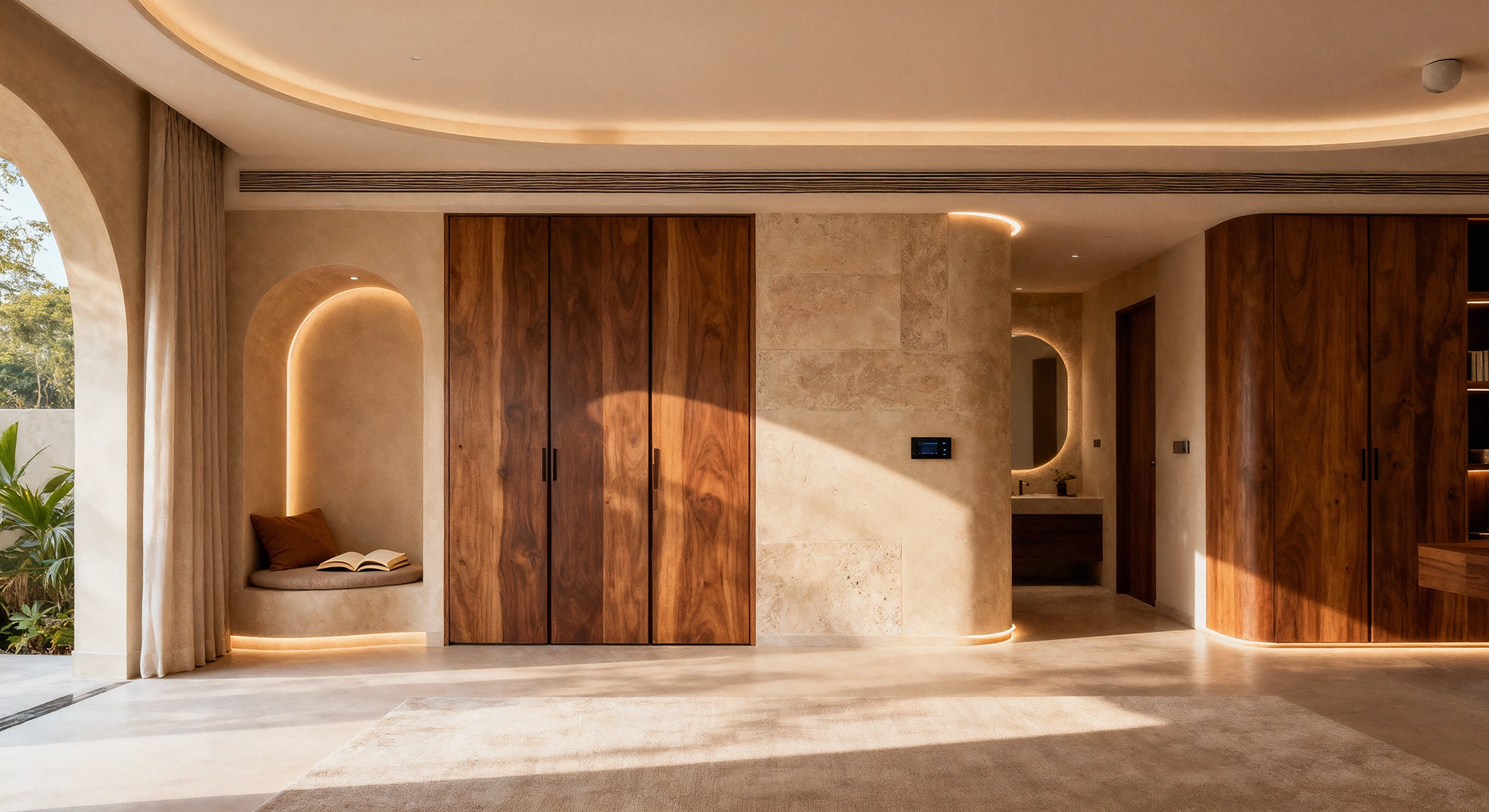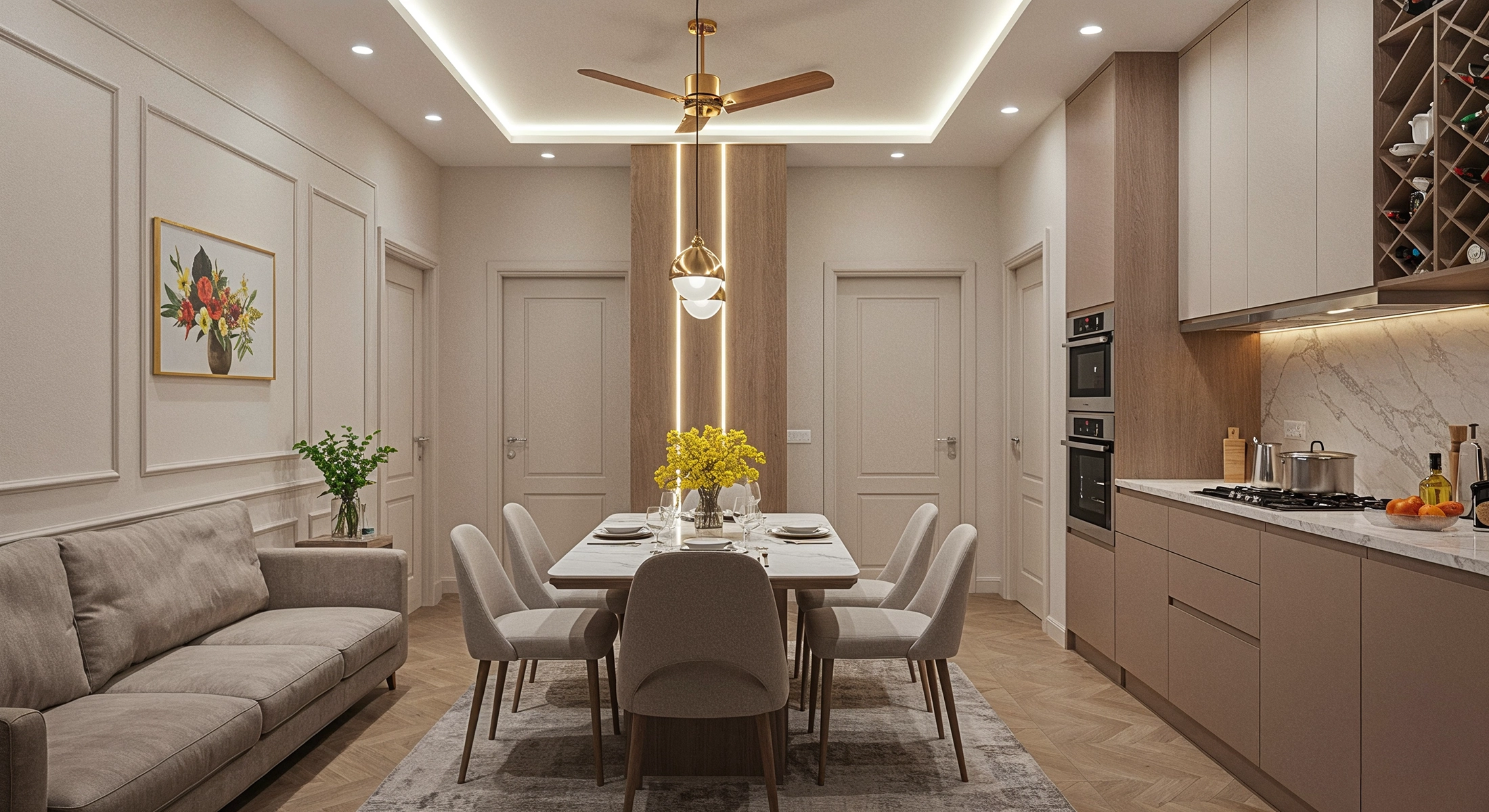


When we walk into a well-designed home, we often admire what we see: the furniture, the finishes, the curves, the silhouette. Yet in the most elevated homes, those crafted by Kosha Spaces for clients in Noida and Greater Noida, the magic resides in what is invisible. The unseen threads that hold the aesthetic tapestry together: the acoustics, the flow, the concealed services, the daylight choreography, the ambient changes. This is the “invisible part of design.”
What do we mean by “invisible”?
In design language, the visible is what you touch, see, and admire. The invisible are the decisions you don’t see but feel: when you sit in the living room and it feels restful; when you walk through the corridor and the light dances gently; when you host a dinner and the kitchen hums quietly; when you lie in bed and hear nothing but silence. These are design elements that don’t shout—they whisper.
Why luxury homes in Noida/Greater Noida must pay attention
In rapidly built-up districts, many homes focus on flash and façade. But flawless luxury requires that the unseen aspects be as refined as the seen. Poor acoustics, sub-optimal lighting, awkward circulation, and exposed ducts all reduce the sense of serenity and elevate cost. India-focused blogs on interior design mistakes emphasise that poor flow, clashing furniture scale, bad lighting layering derail quality.
Key invisible design elements
- Flow & circulation: The way one moves through a home should feel intuitive. Entry → living → dining → terrace should be seamless. The sequence matters.
- Acoustics & sound comfort: In luxury homes, sound insulation between floors, minimised mechanical noise, and appropriate floor finishes all contribute to a calm environment.
- Lighting systems: Not just fixtures you see—but the hidden wiring, dimming systems, daylight sensors, task/ambient/accent layering. The richness is in the subtlety.
- Daylight & view control: Large windows must still have sun-control, glare reduction, and smart brise-soleil. The daylight must be gentle, framed, choreographed.
- Services & maintenance accessibility: Hidden ducts, clean-service pathways, modular cabinetry—all allow upkeep without compromising aesthetics.
- Material joints, durability, craftsmanship: The seams, transitions, service panels—they are discreetly integrated so the design remains clean and uninterrupted.
How Kosha Spaces integrates the invisible
- Invisible mapping: Early in design, we map the “invisible” — duct paths, wiring routes, service access, and lighting circuits.
- Mood layering: Daylight, artificial light, and shadows are layered so the home shifts mood through the day — morning freshness, afternoon glow, evening intimacy.
- Material transition strategy: You step from living to dining; the flooring subtly changes; the ceiling treatment shifts—without noticing abruptly.
- Comfort engineering: We ensure HVAC quietly hums, floors feel warm underfoot, doors operate softly, even when hosting guests.
- Hidden storage & utility zones: Service zones are tucked away but accessible; the home stays uncluttered.
- Sustainable invisibles: Rainwater harvesting, passive cooling, intelligent lighting controls—they live beneath the surface but affect every moment.
The result
When a visitor steps into such a home in Greater Noida, they don’t say “look at that light fixture”—they say “it feels right.” They don’t ask “where is the ducting?”—they simply revel in quiet. They don’t notice the wiring—because they are immersed in ambience. And for the homeowner, the unseen becomes the deepest luxury.
Final word
In luxury interiors, especially in areas like Noida and Greater Noida, where the clientele demands not just aesthetics but soul and longevity, the “invisible part of design” becomes the most tangible asset. At Kosha Spaces, we believe that what you don’t see often defines how you feel. Craft with us the unseen, and feel the difference every day.